From Treasury Masterminds
Our founder, Patrick Kunz, joined the EACT Summit 2026 in Brussels, an invitation-only gathering of senior treasurers and CFOs across Europe. With him, a few treasury masterminds board members were there as representatives of their national treasury association (NTA). Below are our observations:
What makes this event stand out is the setup: no vendor noise, no sales pitches, just treasury professionals talking about what’s actually happening inside their organisations.
And that already puts it ahead of 90% of events out there.
Setting the tone: focused and peer-driven
The agenda was designed to keep things sharp and different. Shorter sessions, direct discussions, and a strong focus on real-life challenges rather than theory.
Less storytelling, more reality. Which, for treasury, is usually where things get real.
1. Macro, geopolitics, and the “new normal”
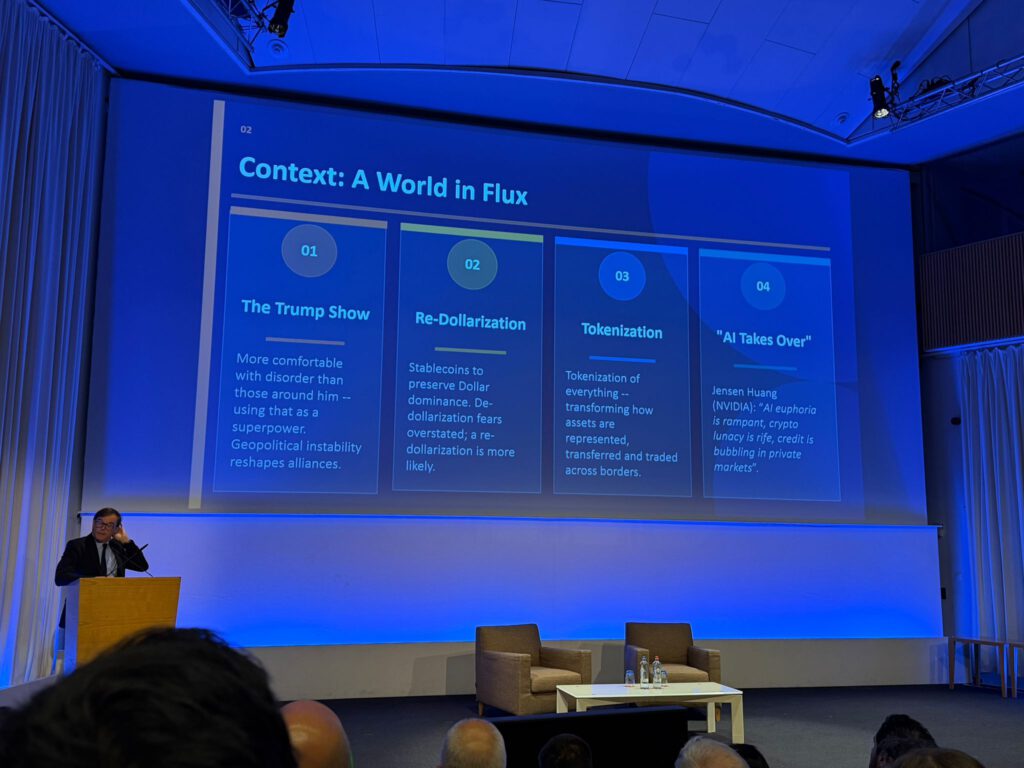
The opening sessions focused heavily on the macro environment. But the tone has shifted compared to previous years.
This wasn’t about “how to prepare for volatility.” It was more like: volatility is the baseline now.
Key themes:
- Fragmentation of global markets
- Ongoing geopolitical tensions are impacting liquidity and FX
- Increasing importance of regional treasury strategies
There’s no expectation that things will stabilise anytime soon. Treasury is adapting to a structurally different world.
2. Liquidity: still messy, still underestimated
Liquidity management was a core theme throughout the agenda.
Not in a conceptual way, but very practical: Where is the cash, how fast can you access it, and what’s still stuck?
Recurring topics:
- Trapped cash in complex jurisdictions
- Centralisation vs local autonomy
- Ongoing challenges in cash visibility
The slightly painful conclusion: A lot of organisations still don’t have a reliable, real-time view of their liquidity.
Yes, still.
3. Technology: reality check over hype
There was plenty of attention on TMS, automation, AI, and data. But instead of the usual hype, the discussions were more grounded.
Key takeaways:
- Data quality remains the biggest bottleneck
- Integrations are more complex than expected
- Internal alignment is often the real reason projects fail
The underlying message was consistent:
Technology is rarely the issue.
Processes, data, and governance are.
4. Payments and fraud: shifting left
Payments and fraud prevention were clearly high on the agenda. Not surprising given the continued rise in payment fraud and increasing regulatory pressure.
Key themes:
- Verification of Payee and its limitations
- Balancing control with efficiency in payment processes
- Moving fraud prevention earlier in the chain
The shift is clear: The Treasury is moving away from detecting fraud at the moment of payment,
towards preventing it at the source, especially in master data and onboarding.
Because catching it at the payment stage is usually too late.
Clear highlight: a banker saying that correspondent banking is outdated and too slow. Blew my mind hearing this.
5. The evolving role of treasury
Across multiple sessions, one theme kept coming back: the role of treasury is expanding.
Not in a theoretical sense, but in day-to-day reality:
- More involvement in business decisions
- Closer alignment with the CFO and operational teams
- Increasing ownership of data, risk insights, and liquidity strategy
At the same time, there’s a clear gap: Expectations are growing faster than treasury teams can adapt.
Which creates pressure, but also opportunity.
6. AI in treasury:
AI was on the agenda, but the tone was different from what we usually hear. Less “AI will transform treasury.” More “here is the narrow slice where it actually works.”
The most useful framing from the sessions was a simple matrix. Type of data (tabular, vision, text) mapped against type of AI technique (classification, regression, clustering, generation).
What this makes obvious is that real treasury value sits in the tabular quadrant: forecasting, fraud detection, liquidity stress testing, and working capital profiling.
Generative AI got the branding. Classification and OCR do the actual work in treasury today.
Key takeaway from the session: if you cannot describe your use case as data type plus technique equals decision, you do not have a use case. You have a slide.
7. Transfer pricing:
Transfer pricing came up more than expected. Key takeaway: documentation is now a strategic asset. Pricing rationale has to be written at the moment of the transaction, not reconstructed two years later when the auditor arrives.
Key shifts:
- Pillar Two changed the math. Winning the transfer pricing argument is no longer enough. If your treasury centre sits in a low tax jurisdiction, a TP adjustment can push the effective rate below 15% and trigger top-up taxes abroad.
- Standalone credit rating is the primary basis for intercompany loan pricing. Implicit group support now requires explicit justification.
- Substance is the new compliance. Real staff, real systems, real decision authority inside the treasury centre.
- Treasury and tax can no longer work from separate scripts. That does not mean treasury takes on the tax role. It means both functions need shared language, shared documentation, and aligned governance.
8. Payment structures
Intercompany clearing first. Payments and collections on behalf of the entity are second. External accounts are routed through the in-house bank third. Direct online banking last, and minimised.
- In-house banking plus a payment factory turns fraud prevention from episodic to systemic. Risk scoring on every payment, sanction checks, signatory limits, and vendor onboarding controls.
- And a point worth repeating: speed is often the enemy of control. Scheduled payment runs as default, instant as exception.
In a sentence: the boring choice is usually the right one.
Final reflection
The biggest takeaway for us?
Treasury doesn’t have a knowledge problem. It has an execution problem.
We all know what “good” looks like:
- clean data
- full visibility
- strong processes
- aligned stakeholders
But actually getting there is still where most organisations struggle. And that’s exactly what came through during the summit. Different companies, different setups, same underlying challenges. Just at different stages of solving them.
Also Read
- Treasury 360 Nordic 2026 – Thursday Recap (from the floor)
- PSD3 Is Coming, But the Real Impact Starts Earlier Than You Think
- Payments Are Breaking (Again): Why Fraud, Multi-Rail Complexity and Regulation Are Redefining Treasury
- Stablecoins and Central Banks: A New Regulatory Chess Game
- Oil Price Shocks: The Treasury Domino Effect
- Sustaining Financial Clarity as Organisations Grow
- Webinar Recap: Cash Flow Forecasting on Trial
- Should Cyber Risk (and Insurance) Be on the Treasurer’s Agenda?
Join our Treasury Community

Treasury Mastermind is a community of professionals working in treasury management and those interested in learning more about topics such as cash management, foreign exchange management, and payments.
To register and connect with Treasury professionals, click [HERE]