
This article is written by Nomentia
There are a few things that are more important for small and medium-sized businesses than efficient payment processing. Prompt payment processing drives liquidity and makes cash flow management make sense.
Smooth payment processes contribute to competitive advantage, reduce costs, help manage risks, and, in tandem with your other systems, make it clear what’s going on in your business.
That’s value, is it not? Have you ever considered a payment hub?
Payment hub – painless payment processes for SMEs?
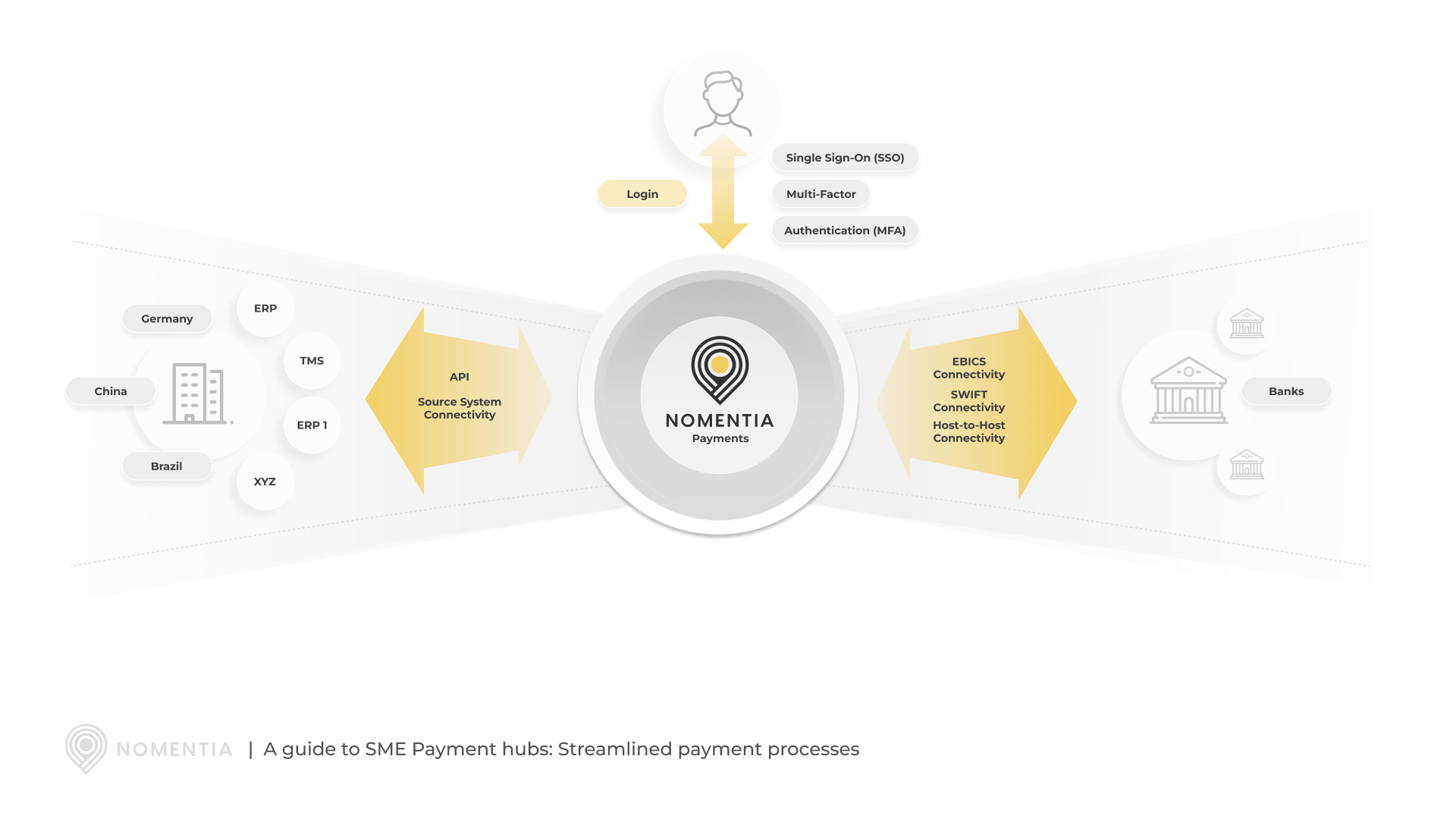
Payment hub – what is that?
You might think a payment hub is something only large enterprises require, but nothing could be further from the truth. If you’re making payments consistently, chances are high that you need a payment hub.
Large enterprises and small and medium-sized enterprises (SMEs) differ in their payment hub needs due to varying scale and complexity. While large enterprises handle high transaction volumes with diverse payment types and complex workflows across multiple subsidiaries, SMEs generally have lower transaction volumes and simpler processes, needing a payment hub that integrates easily with existing systems like accounting software.
Both large enterprises and SMEs require payment hubs that seamlessly integrate with existing IT infrastructure, but SMEs tend to operate in comparatively less complex IT environments.
Scalability is crucial for both. Large enterprises need hubs to handle growth and, depending on the nature of their industry, seasonal spikes in cash flow, while SMEs need flexibility to expand operations without disruption.
Think about it this way; if large enterprises can leverage payment hubs to improve operations and drive financial strategy, why would that be any different for small and mid-size businesses?
Aren’t they also in dire need of efficiency, accuracy, security, and other improvements in their payment processes?
There’s no better way to bring together multiple payment channels, methods, and transactions for streamlined processing and management.

Payment hub functionalities for SMEs:
When implemented right payment hubs provide several concrete benefits for finance and treasury teams.
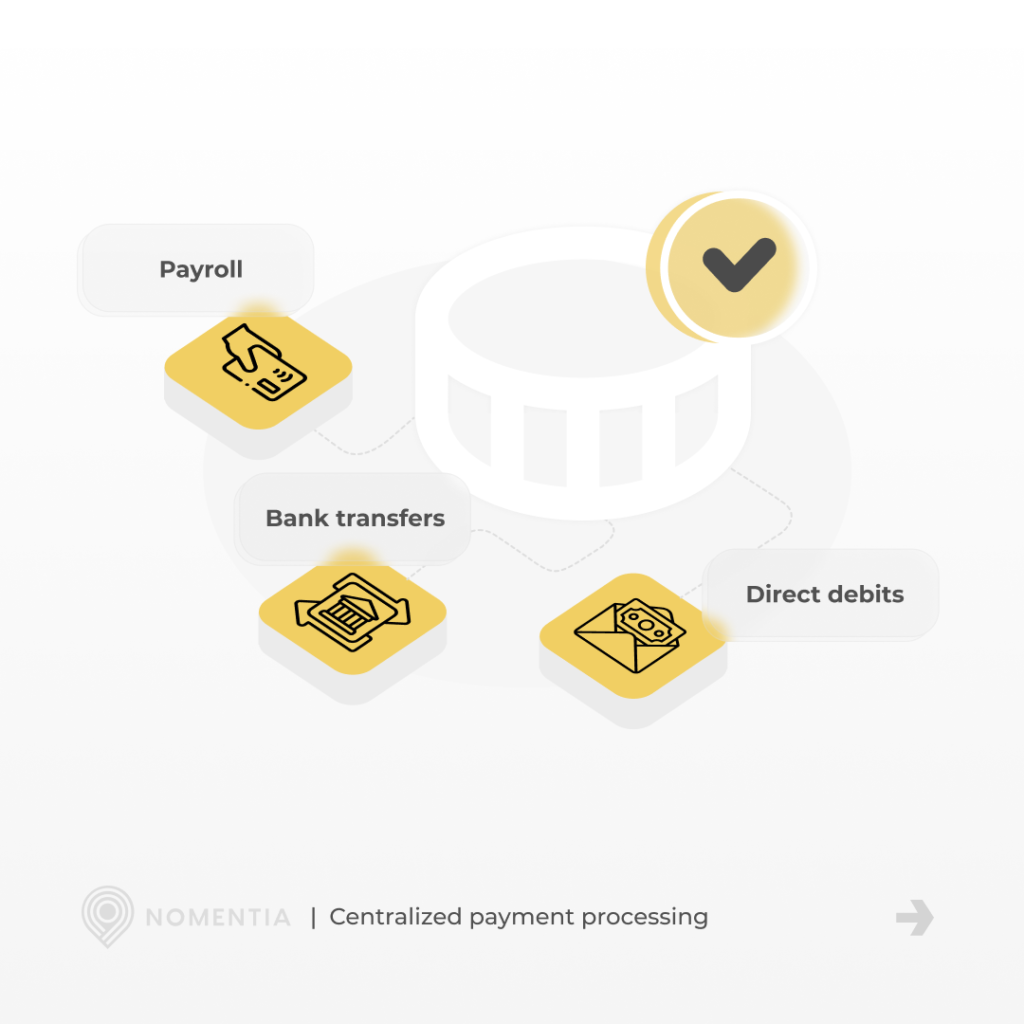
Ability to manage various payment methods like direct debits, payroll and bank to bank payment, in one platform.
Activate Windows
Payment hub

Seamless integration with existing systems like accounting software and ERP systems.

Robust security features such as encryption, tokenization, and fraud detection to safeguard sensitive payment data.

Automation of payment processes to reduce manual effort and streamline workflows, saving time and resources.

Real-time visibility into cash flows, transaction statuses, and payment reconciliation for informed decision-making.

Scalable solution that can accommodate growing transaction volumes and support business expansion.

Intuitive and easy-to-use interface that requires minimal training for staff members.
Flexibility to customize workflows, approval processes, and payment configurations to meet specific business needs.

Access to responsive customer support and ongoing updates and maintenance to ensure smooth operation of the payment hub.
SME payment hub success stories
“NOMENTIA’S WEB-BASED, EASY TO CUSTOMIZE SOLUTION WITH ALREADY-ESTABLISHED BANK CONNECTIONS WAS THE MOST OBVIOUS CHOICE.”
Greenchoice was struggling with ineffective manual cash management processes across multiple banks. They sought to streamline operations, improve visibility into cash flows, and simplify payment processes with Nomentia. Nomentia’s web-based, customizable solution offered established bank connections and affordable pricing, aligning with Greenchoice’s needs. Read about Greenchoices success with Nomentia here…

.png?width=600&height=600&name=Brita%20logo%20square%20(USA%20only).png)
Brita was burdened by complex payment processing due to using multiple banks and lacking a centralized system. To address these issues, they opted for Nomentia, a single tool independent of banks, to streamline their payment operations.
Implementing Nomentia required strategic moves such as ensuring subsidiaries use the same ERP system and connecting with group banks for all payment types. Read about Brita’s success with Nomentia here…
When implementing a modern payment hub there is no shortage of challenges. Luckily, they can be overcome with forethought, careful planning – and support.
Payment hub implementation and integration strategies for SMEs
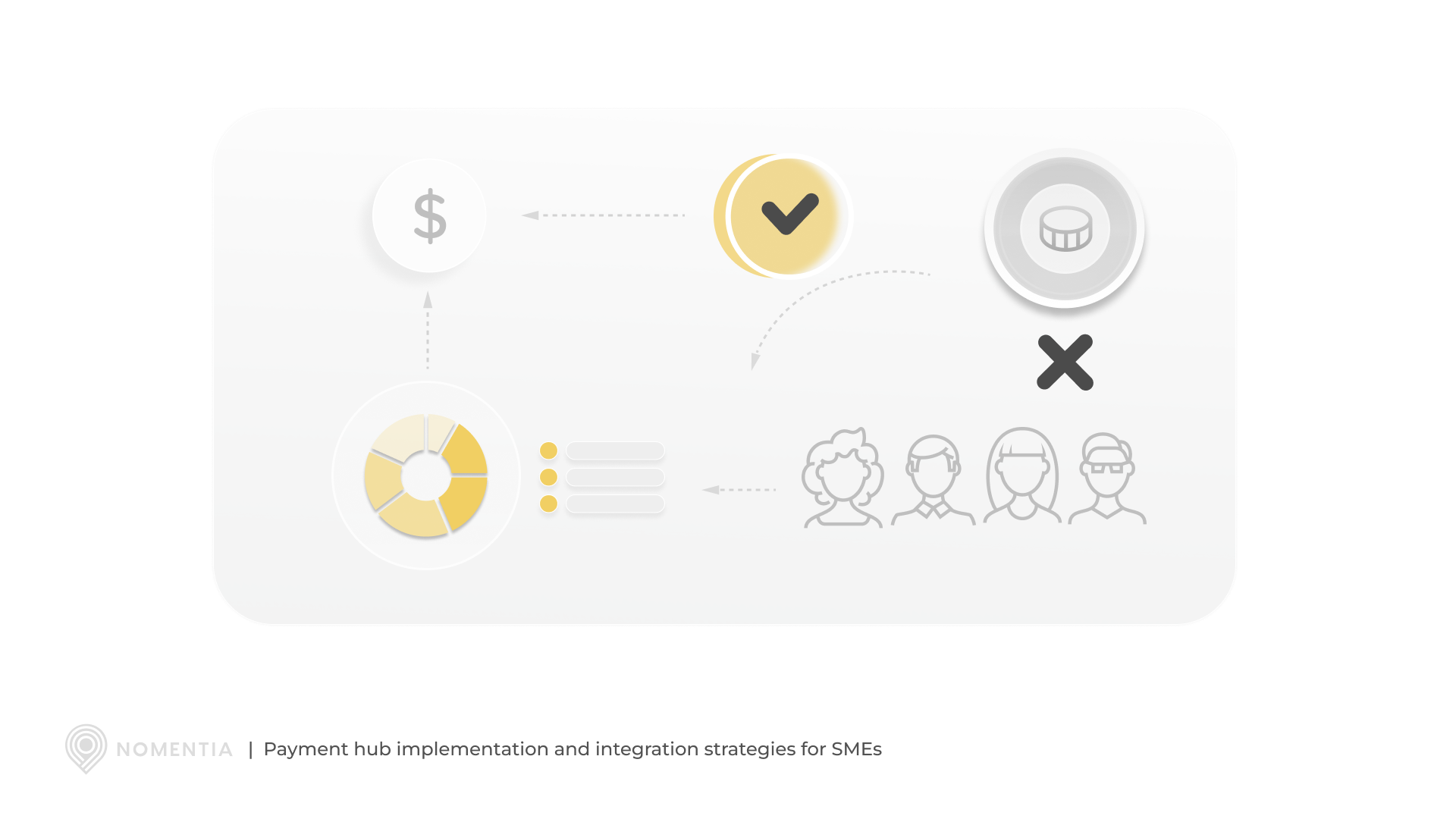
Implementing a payment hub to centralize your payment operations can seem like a daunting task, but there’s no reason for dread. With careful planning and consideration of key factors, payment hub implementation will lead to streamlined payment processes and improved efficiency. We had the good fortune of having a seasoned treasury professional to give us the details.
Roadmap to payment hub implementation success
Before selecting a payment hub, clearly define your objectives and requirements. It’s good to consider factors such as the volume of transactions, types of payment methods used, integration with existing systems, and scalability for future growth. Understanding your needs will help you choose a solution that aligns with your business goals.
Money’s always tight, so it is essential to choose a payment hub solution that offers enough bang for your buck. Look for providers that understand your needs while providing the necessary payment hub features and functionalities.
As your business grows, your payment processing needs will evolve too. Selecting a payment hub solution that can scale with your business, accommodating increasing transaction volumes, new payment methods, and expansion into new markets is the best way to future-proof your payment operations. Make sure that your chosen payment hub solution offers scalability without compromising performance or incurring significant additional costs.
Integration with your existing systems is critical for the seamless adoption of a payment hub, which is why you should prioritize payment hubs that offer easy integration with popular accounting software, ERP systems, and other essential business systems.
It’s always best to choose a provider that offers pre-built integration and APIs that simplify the integration process and minimize disruption to your operations.
To make sure your payment operations hit the ground running when your payment hub implementation is ready, follow these steps:
Steps to payment hub implementation success
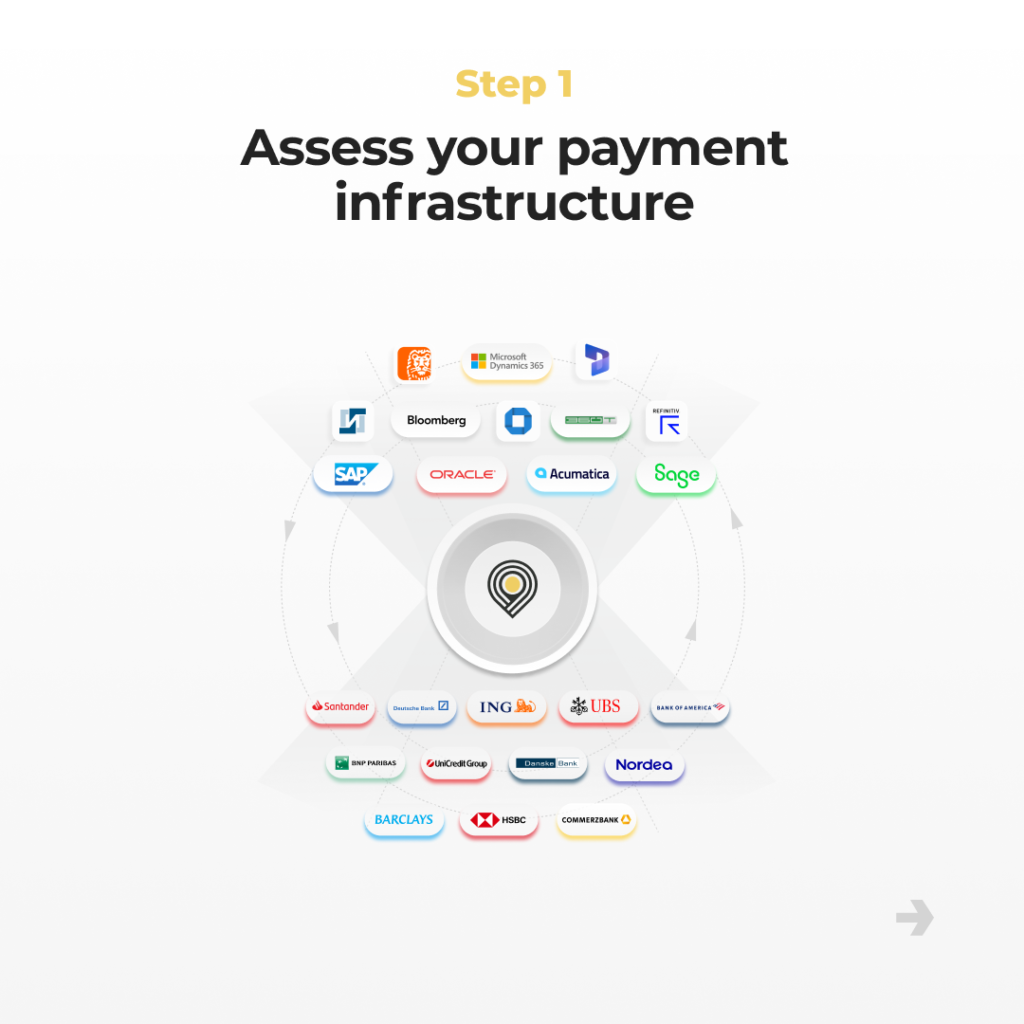
Payment hub implementation starts with assessing and understanding your current systems, processes, and data flows to see how the payment hub fits in and what integration points are needed. Pay special attention to banks, bank connections and connectivity types that need to be assessed and accounted for. Negotiate with your banks whether they can provide automatic bank statements and at what cost.

Once you know what’s needed you should determine how the payment hub will interface with existing systems like ERP, accounting, and CRM platforms. Seek guidance from experienced partners if needed.
Cleanse and prepare data for migration, then configure systems to accommodate nev payment processes and workflows.
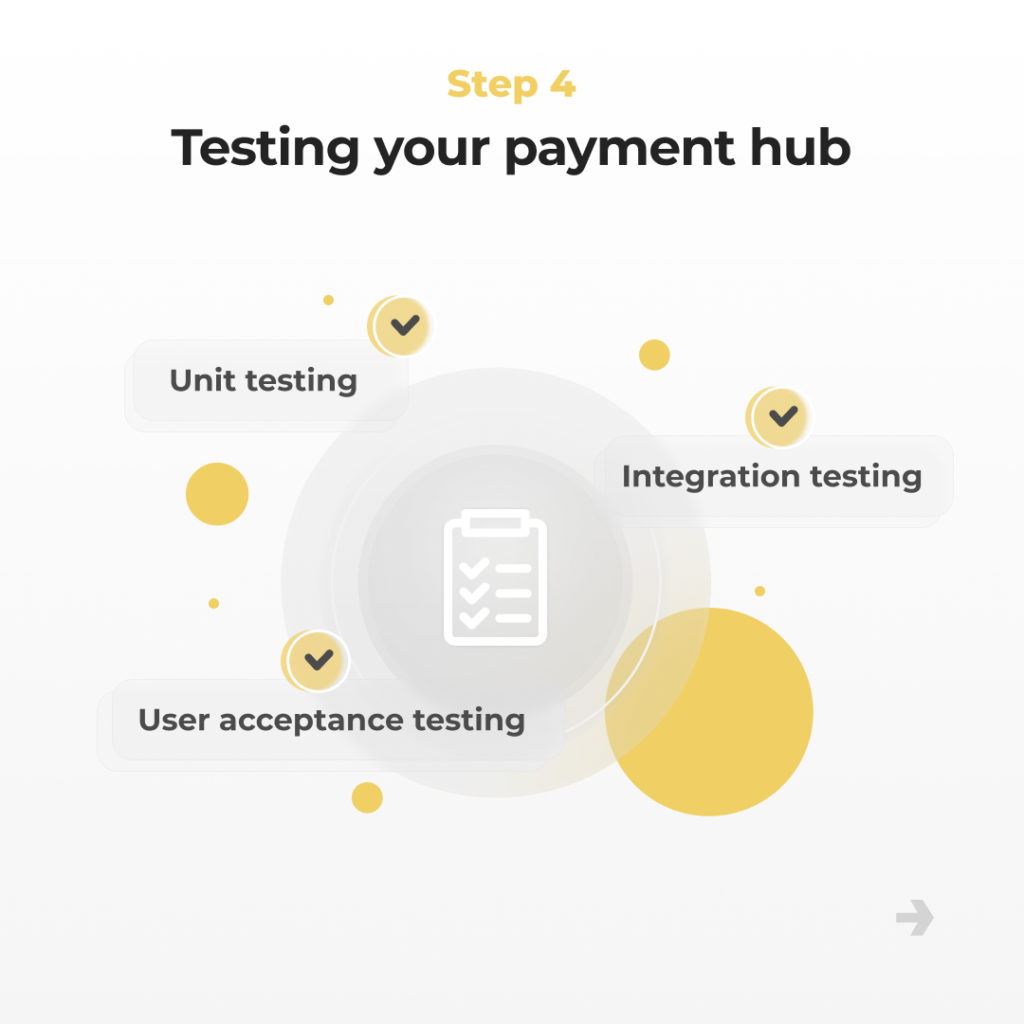
Thoroughly test your new payment system to ensure accuracy and identify any issues before going live.

Roll out the payment hub to end-users, provide training, and closely monitor system performance and feedback.
Iterate and improve the payment hub based on feedback and evolving needs, ensuring long-term value and efficiency.
Common payment hub challenges and concerns
SMEs are often concerned about wastage while their opportunities tend to be hampered by limited resources like budget, personnel, and time.
Pricing models are a key factor when lessening these worries, but it’s equally important to prioritize features that streamline payment processes and reduce manual effort, allowing you to maximize the efficiency of your existing resources, while not jeopardizing security.
Adopting modern technologies like a payment hub can breed cyber security concerns that need to be addressed. A payment hub solution provider that prioritizes security and compliance, with robust encryption, tokenization, and fraud detection measures in place should be on top of every SMEs list if their security principles are built on technical expertise.
Experienced payment hub providers who offer comprehensive support and guidance throughout the implementation process should also offer training programs, documentation, and ongoing customer support to help your team gain the necessary skills and knowledge.
Also Read
- Intercompany Transactions Guide: Meaning, Management & Strategies
- Starting a new job in Treasury: Best practices and expert advice
- How does physical cash pooling & target balancing work with a TMS?
- Implementing a Global Enterprise-scale Payment Hub: The Challenges and Business Impacts
- Treasury Technology Trends in 2024: How APIs, AI, and RPA Change the Treasury Landscape?
- A deep dive: Simplifying guarantee management for treasury & finance
- How to improve payment security for treasury & finance teams
- How AI and ML are used in payment fraud detection (16 use cases)
- Intercompany Transactions Guide: Meaning, Management & Strategies
Join our Treasury Community
Treasury Mastermind is a community of professionals working in treasury management or those interested in learning more about various topics related to treasury management, including cash management, foreign exchange management, and payments. To register and connect with Treasury professionals, click [HERE] or fill out the form below to get more information.